As in the 2024 financial year – during which we successfully launched the new Hamburg - Lübeck Skandinavienkai return route, Antwerp - Madrid v.v. and Rotterdam RSC - Cologne-Eifeltor v.v. – the Kombiverkehr sales team had also set itself a number of innovation targets for the past financial year, investing throughout the year in new commercial train concepts and assessing the feasibility of their operational implementation.
The aim was, in the first year following the transformation, to further expand and enhance the train service offering and the attractiveness of the products within the national and international network. Operational efficiency was also set to improve further through increased train frequencies on certain routes. However, looking back, things unfortunately turned out differently than hoped: there was still no noticeable economic upturn in 2025, and demand for intermodal transport services largely stagnated. The impact of major refurbishments on the German rail network (including the Hamburg - Berlin line, with knock-on effects in the Hanover area) and other major construction projects, such as the closures in the Rhine and Elbe valleys, meant that service quality remained at a low level. Rising track access charges further complicated the competitive landscape and the marketing of rail services. Consequently, it was not possible to implement some of the planned new services.
Whilst implementing a new operational concept for services to Spain – on this route, the timetable change for 2025/2026 saw a complete switch from multi-group trains to single-group trains for direct services between the intermodal hubs of Barcelona Morrot and Ludwigshafen KTL, we and our customers were suddenly confronted with the reality of European infrastructure when a tunnel closure in Catalonia lasting several weeks took us by surprise. To date, the new train schedule, with eleven departures per week in each direction, has not yet been fully implemented due to restrictions.
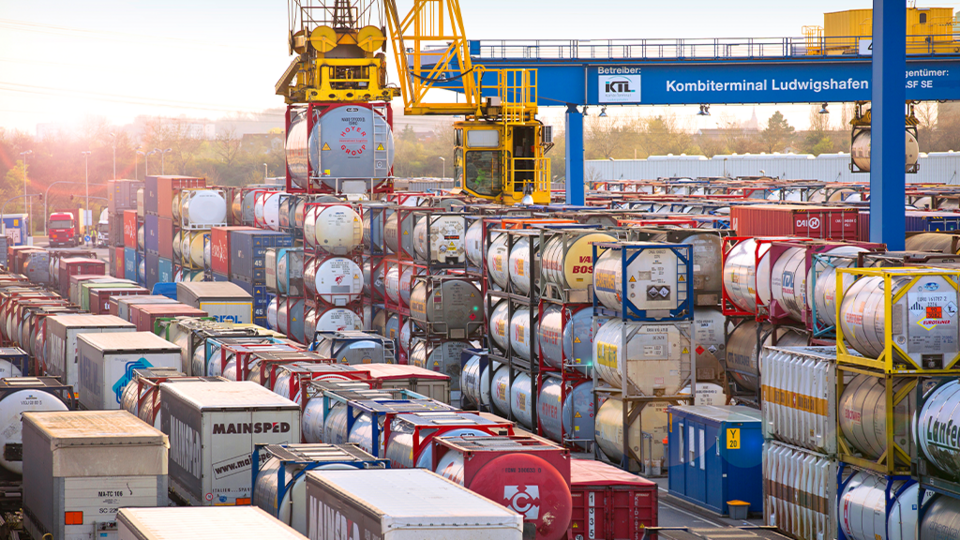
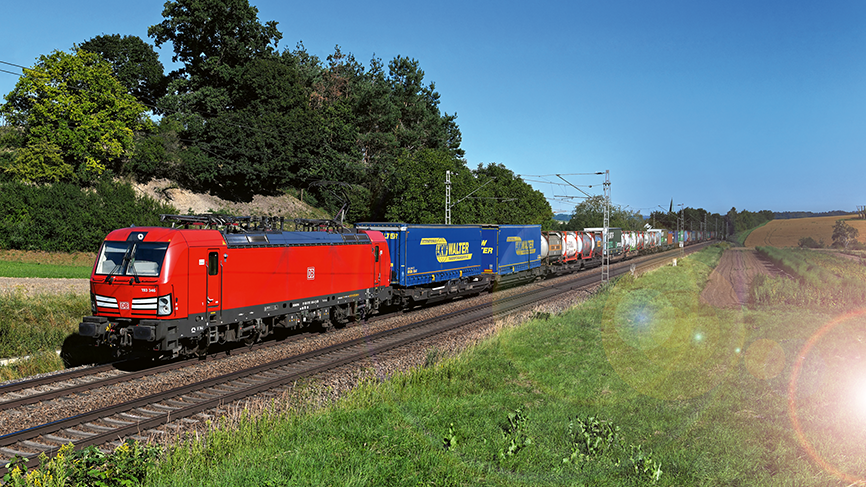
Despite adverse circumstances, we nevertheless managed to create capacity within the network and introduce new services in 2025:
- Right at the start of the year, train capacity on the Brenner route was increased. A direct service was reintroduced between Lübeck and Verona, with two return journeys per week via a direct route and three return journeys via Hamburg.
- In mid-October, we increased the frequency of the direct Rostock – Verona Interterminal v.v. service to seven round trips per week.
- In December 2025, based on a new partnership, we switched our service for Poland to the Neuss Trimodal terminal. Since then, direct trains have been running six times a week in each direction to and from Poznan Clip Swarzedz.
Further adjustments to the network followed in the first half of 2026:
- Since January, our customers have benefited from a new and efficient connection between Mortara and Cologne-Eifeltor. After initially running three round trips per week, the train service between the Rhine-Ruhr region and Northern Italy was expanded by two further round trips in a very short space of time.
- On a new national connection between the Hamburg-Waltershof terminal (Eurokombi) and the DUK terminal in Dörpen, we ran a trial train in April which transported steel sheets for wind turbines with a special permit and using special 40-foot flat-rack containers.