

Following two consecutive years of recession, the German economy returned to modest growth in 2025. In 2025, real gross domestic product (GDP) rose by 0.2% compared with the previous year. In 2024, however, German GDP had still fallen by 0.5%, following a decline of 0.9% in 2023. Thus, whilst 2025 marked a turnaround from recession, it did not represent a dynamic economic recovery, but rather a stabilisation at a low level of growth. By European standards, Germany continued to lag significantly behind the overall economic performance of the European Union in 2025. Whilst real GDP in Germany grew by a mere 0.2%, the European Union as a whole recorded economic growth of 1.5%, following 1.1% in 2024. The reasons for Germany’s comparatively weak performance lay primarily in the persistent structural weakness of industry, its dependence on exports, and the effects of global trade and competition distortions.
In the 2025 reporting year, energy prices in Germany fell further compared with the exceptional highs of 2022 and 2023. Nevertheless, they still did not return to the price levels seen before the Russian invasion of Ukraine and remained at a structurally elevated level, particularly for industry and transport. Natural gas and electricity prices, in particular, remained well above the long-term pre-crisis averages in 2025, which continued to weigh on the cost base of many companies.
The transport and logistics sector clearly reflected this macroeconomic trend in the reporting year. Transport volumes developed modestly overall, with some segments seeing a decline in freight volumes. According to preliminary data from the Federal Statistical Office, freight volumes in German rail freight transport in 2025 remained below pre-crisis levels and moved sideways or declined slightly.
In 2025, rail freight transport – and combined transport in particular – was impacted by a number of structural and cost-related factors. In addition to persistently high energy prices, which in many cases had to be passed on to customers, the ongoing extensive construction, maintenance and modernisation work on the German and European rail networks had a particularly negative impact on the cost-effectiveness and reliability of rail freight transport. Line closures and disruptions led to diversionary traffic, longer journey times and increased use of resources, which both incurred additional costs and noticeably impaired the quality of train services.
Long-distance road freight transport benefited in 2025 from falling diesel prices during the year and from available transport capacity due to generally weak demand. Although fuel prices remained above the long-term pre-crisis level, they were lower than in 2022 and 2023 and thus had a stabilising effect on the cost structure of road transport in relative terms.
In addition, changes in the political landscape had an impact. The reduction in track access charge subsidies (TraFöG) for rail freight transport, announced by the Federal Government in January 2024, continued to drive up costs in 2025, as the subsidy amounts originally budgeted for were not available in full. The subsidy scheme is fundamentally designed to reduce the cost disadvantage of rail compared to road transport and had been factored into transport prices by market participants in its original form.
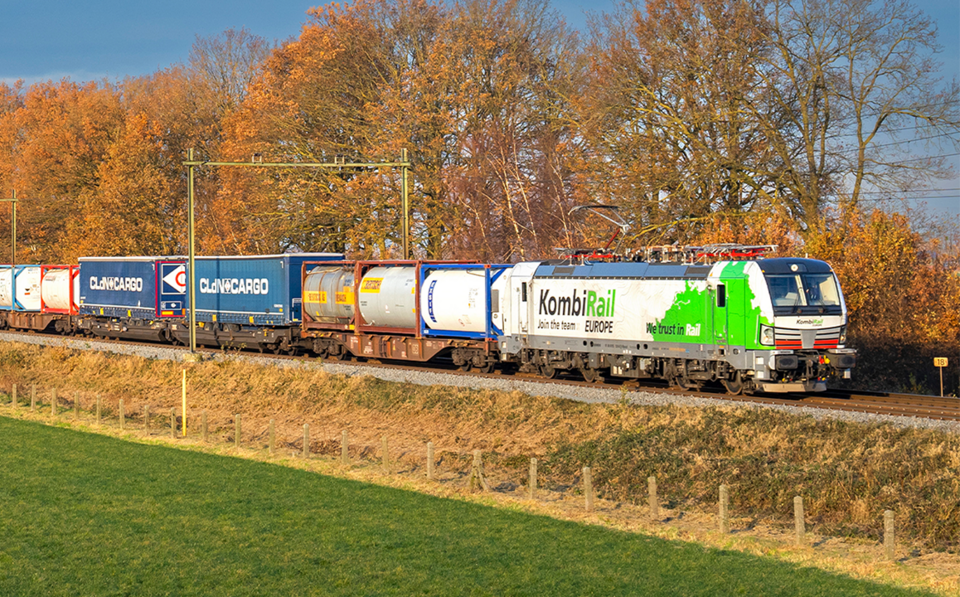
Following the European Commission’s competition proceedings against the Federal Republic of Germany, as the owner of DB Cargo, the company has decided to gradually transfer a large proportion of its traction services to third-party rail transport operators from June 2024 onwards in order to safeguard its transport services.
The complex transition process, which encompassed not only traction services but also wagon management and order processing, was largely completed by the end of 2024 and fully concluded in 2025. A total of twelve contracted carriers and further subcontractors act as operating carriers for Kombiverkehr.